You’ve seen them all over Instagram. Bright green smoothies in cute glasses, captioned “weight loss secret” or “flat tummy elixir.” So you bought a blender, threw in some spinach, a banana, almond milk, and maybe a scoop of peanut butter. And then… nothing happened. No weight loss. Maybe you even gained a pound.
What went wrong?
I’ll tell you exactly what went wrong, because I made the same mistake for six months. And once I fixed it, the pounds finally started coming off.
The Hidden Calorie Bomb
Here’s the truth nobody tells you: smoothies can be incredibly healthy AND incredibly fattening at the same time.
Most people assume that because something is blended and green, it’s automatically low calorie. But let me give you an example. A “healthy” smoothie with:
- 1 banana (105 calories)
- 1 cup mango (100 calories)
- 2 tablespoons peanut butter (190 calories)
- 1 cup full-fat coconut milk (445 calories)
- 1 tablespoon honey (60 calories)
- Handful of spinach (negligible)
That’s nearly 900 calories. In one drink. And you’re still going to eat breakfast, lunch, and dinner.
Do that every morning for a week, and you’ve added over 6,000 extra calories to your diet. That’s almost two pounds of potential fat gain.
I’m not saying this to scare you. I’m saying it because I wish someone had told me sooner.
The Fix: Protein, Fiber, Fat (In the Right Ratios)
A weight loss smoothie needs three things and only three things:
- Protein – keeps you full and preserves muscle (20-30g)
- Fiber – slows down sugar absorption and aids digestion (8-10g)
- Healthy fat – satisfies cravings and supports hormones (10-15g)
But here’s the catch: you have to measure them. No eyeballing.
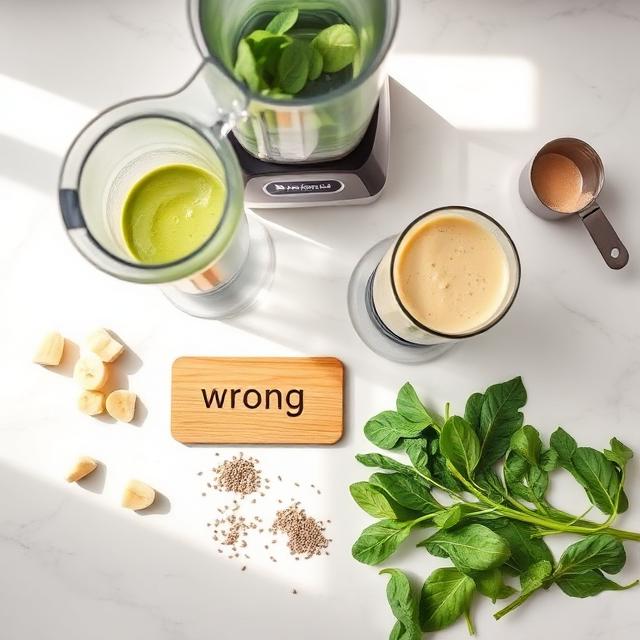
Here’s a weight-loss-friendly smoothie that actually works:
- 1 scoop unsweetened protein powder (120 cal, 25g protein)
- 1 cup unsweetened almond milk (30 cal)
- 1 cup spinach (7 cal)
- ½ frozen banana (50 cal)
- 1 tablespoon chia seeds (60 cal, 5g fiber)
- ½ tablespoon almond butter (50 cal)
Total: under 320 calories. Keeps you full for 4 hours. Tastes like a treat.
Why Your Smoothie Isn’t Keeping You Full
Another common mistake? No protein. If your smoothie is just fruit and juice, you’re drinking sugar water with vitamins. You’ll be starving in 90 minutes. Then you’ll snack. Then you’ll overeat at lunch.
That’s not a weight loss smoothie. That’s a sugar crash waiting to happen.
The magic of a properly built smoothie is that it acts like a meal. The protein and fat tell your brain “I’m full.” The fiber physically fills your stomach. The natural sugar from fruit gives you energy without a spike.
When you get that balance right, you won’t even think about food for hours. That’s how weight loss happens – not through willpower, but through smart nutrition.
The “Kitchen Sink” Problem
I used to throw everything into my smoothies. Spinach? Yes. Kale? Yes. Chia, flax, hemp? All three. Cacao nibs? Why not. Coconut oil? Sounds healthy.
Stop that.
Every ingredient has calories. And those “superfoods” add up fast. Two tablespoons of chia seeds? 120 calories. One tablespoon of coconut oil? 120 calories. A handful of walnuts? 200 calories.
Suddenly your “healthy” smoothie is 600 calories before you even add the fruit.
The rule I now follow: no more than 6 ingredients in a weight loss smoothie. Liquid + protein + greens + fruit + fat + fiber. That’s it. Anything else is optional and should replace something else, not add to it.
When to Drink Your Smoothie for Weight Loss
Timing matters more than you think.
Drinking a smoothie first thing in the morning, right after waking up, can stabilize your blood sugar and prevent mid-morning cravings. But drinking the same smoothie at 9 PM as a “snack” while watching TV? That’s just extra calories your body won’t burn.
Personally, I’ve had the best results using smoothies as a breakfast replacement or a post-workout meal. Breakfast replacement works because you start the day with portion control. Post-workout works because your muscles need those nutrients for recovery, so nothing gets stored as fat.
Experiment and see what fits your schedule. But don’t drink a smoothie on top of full meals. That’s how people accidentally gain weight while trying to lose it.
The Bottom Line
Weight loss smoothies are powerful tools, but they’re not magic. You have to build them right, measure your portions, and use them as meal replacements – not meal additions.
The good news? Once you learn the formula, it becomes second nature. And the results speak for themselves.
If you want a complete system that takes the guesswork out of smoothies, teas, soups, and fitness for weight loss, check out the guide that finally made it all click for me.
“SHEDDING POUNDS: WEIGHT LOSS WITH SMOOTHIES, HERBAL TEAS, SOUPS & FITNESS” breaks down exactly how to build each meal for maximum fat loss. No more guessing. No more accidental 900-calorie smoothies.
I used to think I was just “bad at losing weight.” Turns out, I just didn’t know the rules. Once I learned them, everything changed.
Click here to get the step-by-step system that turns your blender into a fat-burning machine. Your future self will thank you.