Raise your hand if this sounds familiar: you want to eat healthy, but by the time you get home from work, you’re exhausted. The last thing you want to do is chop vegetables, wash greens, and blend things. So you order takeout. Again. And then you feel guilty. Again.
I’ve been there more times than I can count. For years, I believed that eating healthy meals at home required hours of prep, a clean kitchen, and some kind of superhuman discipline I simply did not possess.
But then I learned a few shortcuts. And suddenly, making smoothies and salads at home became faster than waiting for delivery.
The 10-Minute Smoothie (Yes, Really)
The biggest myth about smoothies is that they take a long time. They don’t. What takes time is washing, peeling, chopping, and measuring every single morning. So stop doing that.
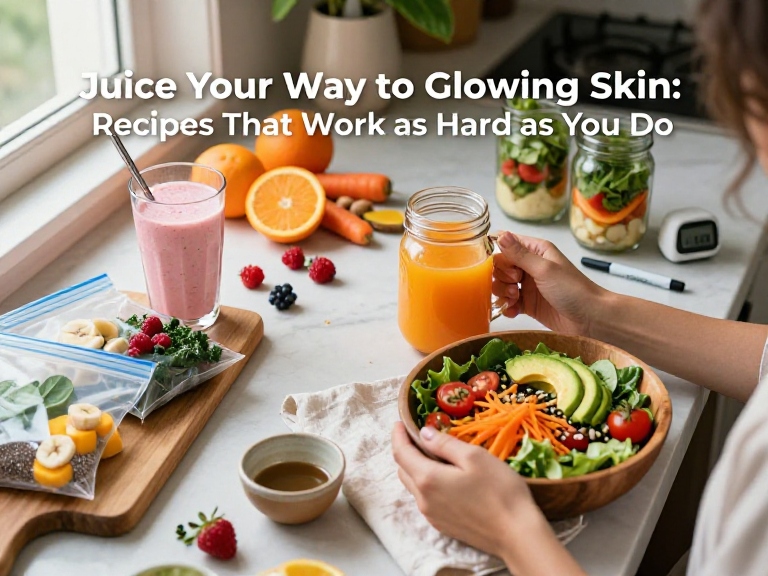
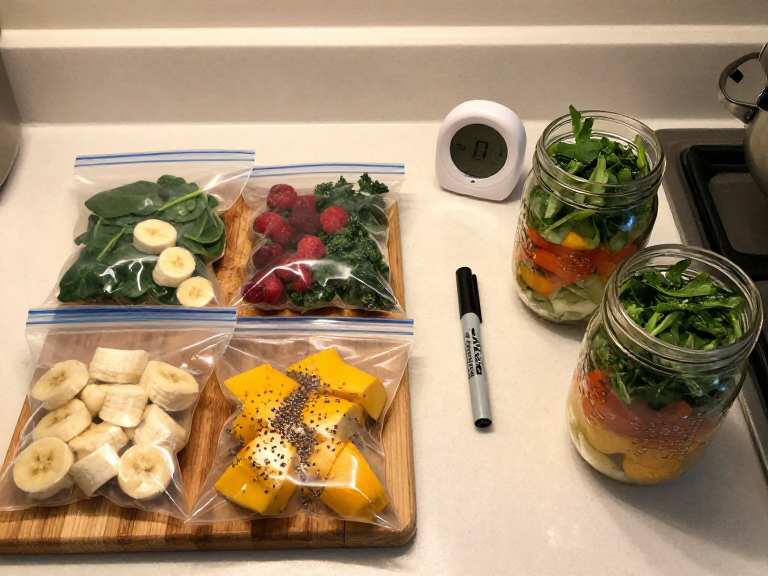
Here’s what I do instead: Smoothie Freezer Packs.
Once a week (usually Sunday evening while watching TV), I grab a bunch of zip-top freezer bags. Into each bag, I put:
- 1 handful of spinach or kale
- ½ a banana (peeled and broken into chunks)
- ½ cup of frozen mango or berries
- 1 tablespoon of chia seeds or flax
That’s it. I make five or six bags at once and toss them in the freezer.
In the morning, I grab one bag, dump it into the blender, add 1 cup of almond milk or coconut water, and blend for 60 seconds. Pour into a cup, rinse the blender immediately (takes 10 seconds), and walk out the door.
From walking into the kitchen to walking out with a smoothie: under 4 minutes.
And it tastes better than anything you’ll buy at a smoothie chain because you control the sugar and ingredients.
Salads That Come Together in 5 Minutes
Salads get a bad reputation for being time-consuming because of all the chopping. But here’s a secret: you don’t have to chop every day.
The Mason Jar Salad Method is a game-changer.
On Sunday, take four or five wide-mouth mason jars. Layer them like this:
- Bottom: Dressing (so it doesn’t touch the greens)
- Next: Hearty veggies like cucumber, bell pepper, carrot (they won’t get soggy)
- Next: Protein like chickpeas, grilled chicken, or tuna
- Next: Chewy elements like dried cranberries or nuts
- Top: Leafy greens (packed loosely)
Screw on the lids and put them in the fridge. They’ll stay fresh for up to 5 days.
When you’re ready to eat, just dump the jar into a bowl (or eat straight from it if you’re feeling feral). The dressing that was at the bottom now coats everything perfectly.
No chopping. No cleaning a cutting board. No decision fatigue. Just a perfect salad in under a minute.
What About Variety? Won’t I Get Bored?
This is the question everyone asks. And it’s valid. Eating the same smoothie and salad every day is boring. That’s why you need a system that allows for variety without extra work.
For smoothies, change up your freezer packs. This week: mango-spinach. Next week: berry-kale. The week after: pineapple-cucumber. The base stays the same (liquid + greens + frozen fruit + booster), but the flavors change.
For salads, swap out one ingredient each week. Different dressing, different protein, different nut. Small changes = big variety.
But here’s the thing: coming up with those variations on your own is mentally exhausting. That’s where a good guide becomes essential.
“Mastering the Craft of Smoothies, Salads, Juices, and Chapman Drinks!” includes over 50 recipes specifically designed for busy people. Each one takes 10 minutes or less. No fancy equipment required.
The #1 Time-Saving Tool You’re Not Using
Let me tell you about my favorite kitchen appliance: my freezer. Not a blender. Not a juicer. The freezer.
Here’s why: almost everything you need for smoothies and salads can be frozen. Spinach? Freeze it. Bananas? Peel and freeze them. Berries? Buy frozen. Even chopped bell peppers and onions can be frozen for salads (they thaw in minutes).
When your ingredients are already frozen, you skip the morning prep entirely. No washing. No chopping. No peeling. Just dump and go.
The only challenge is knowing which ingredients freeze well and which turn into mush. (Hint: cucumbers do not freeze well. Learned that the hard way.)
That kind of practical, kitchen-tested knowledge is exactly what you’ll find inside the guide.